
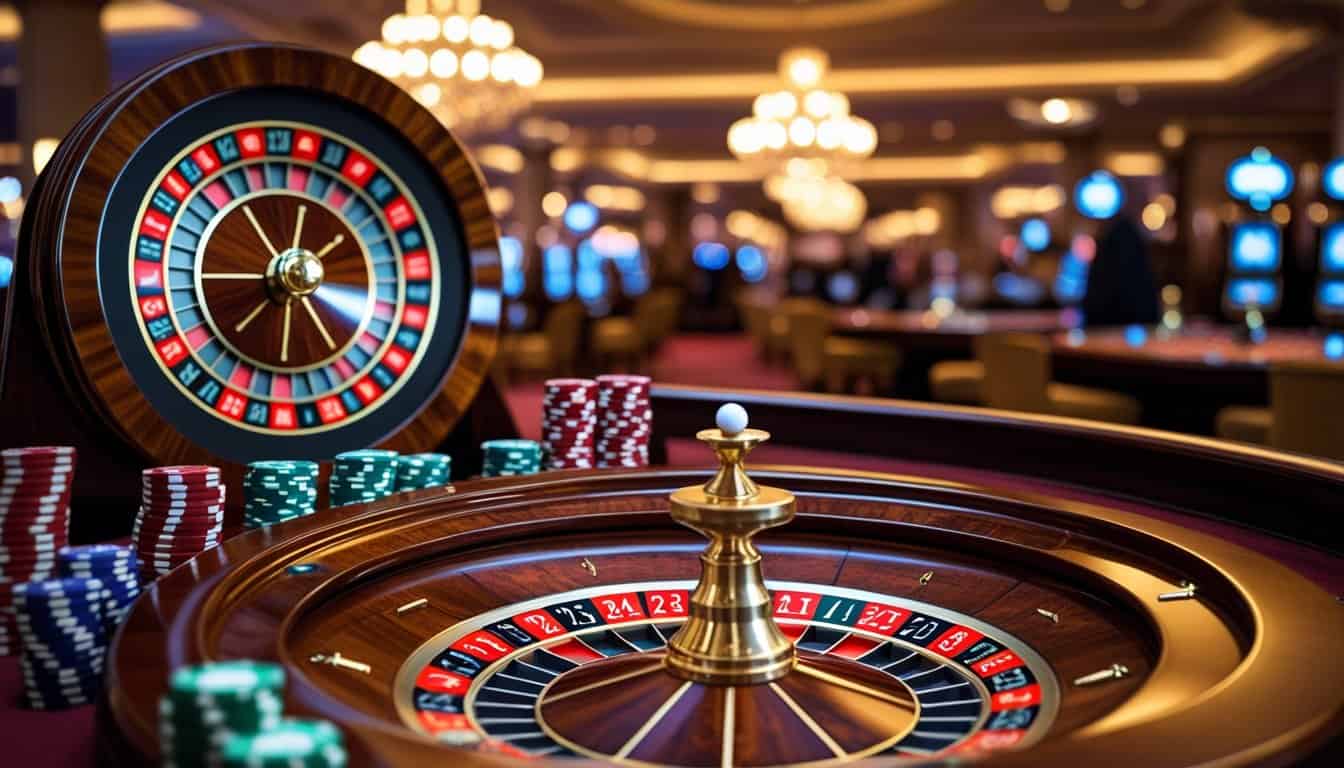
French Roulette evolved from early French experiments in mathematics and chance into a defining fixture of international casino culture. Its design, refinement, and global spread linked the work of innovators like Blaise Pascal and Louis Blanc to the grandeur of Monte Carlo and the later casino scenes in Monaco, Las Vegas, and New Orleans.
Origins and Invention: Blaise Pascal, the Mathematician
The history of roulette traces back to Blaise Pascal, a 17th‑century French mathematician and physicist known for his studies in probability. While attempting to invent a perpetual motion machine, he developed an early prototype of what became the roulette wheel. His experiments combined elements of mathematics, physics, and gaming design.
By the 18th century, the device evolved into a formal gambling game in Parisian salons. The word “roulette” means little wheel, describing its central feature. This blend of scientific curiosity and entertainment established the foundation for modern roulette.
Pascal’s influence endured because his mechanical design intersected with ideas of randomness and fairness. That link between science and play created a structure that continues to appeal to mathematicians and gamblers alike.
Louis Blanc and the Single-Zero Wheel in Bad Homburg
In the mid‑19th century, Louis Blanc and his brother François Blanc advanced the game while operating a casino in Bad Homburg, Germany. Seeking an edge over competitors, they introduced the single‑zero roulette wheel, a change that lowered the house edge compared to earlier double‑zero versions.
This adjustment made roulette more attractive to players. Casinos benefited too, as the new format balanced excitement with profitability. The single‑zero design became the hallmark of what is now called French Roulette.
The Blanc brothers’ success spread beyond Bad Homburg. Their model of game fairness and luxury presentation influenced other European casinos and eventually reached Monte Carlo, as noted by The History of Roulette: From French Salons to Online Casinos.
Monte Carlo Casino and the French Roulette Legacy
In 1863, Prince Charles III of Monaco invited the Blanc brothers to manage operations for the new Monte Carlo Casino. Their roulette tables soon drew European nobility and wealthy travelers, transforming the resort into a symbol of refinement and risk. The single‑zero wheel was central to this appeal.
Monte Carlo’s association with French Roulette made the game synonymous with glamour. The roulette room’s design emphasized elegance, with carved wood, brass details, and professional croupiers. The casino soon became the premier gambling venue in Europe.
As detailed in ancientgames.org’s history of roulette, Monte Carlo’s popularity cemented roulette as a signature European casino game. The venue’s prestige helped define the identity of Monaco as a gambling capital.
Spread to Monaco, Las Vegas, and New Orleans
Roulette eventually crossed oceans and inspired variations as it moved abroad. In America, casinos introduced the double‑zero wheel to speed revenue growth, leading to what is now known as American Roulette. This version increased the house edge but suited the competitive style of early U.S. gaming halls in Las Vegas and New Orleans.
While European and American versions shared the same spinning core, the single‑zero style remained dominant in Monaco and other European casinos. The contrast between the two formats highlighted the differences in player preference and casino strategy.
By the 20th century, roulette tables appeared in both elite resorts and urban casinos. The game’s spread from Monte Carlo to modern gambling centers illustrates how a French invention evolved into a global icon that connects the precision of mathematics with the enduring appeal of chance.
Roulette in Popular Culture: Film, TV, and Literature
Roulette has appeared in countless creative works as both a game and a dramatic symbol. Its image connects glamour and risk, from the elegant casinos of Monte Carlo to the flashing lights of Las Vegas, mirroring human fascination with chance and control.
Iconic Roulette Scenes in Classic and Modern Movies
Filmmakers often use roulette scenes to reveal character motives and emotional tension. In Casablanca (1942), the roulette table becomes a moment of redemption when Rick allows a refugee to win enough for freedom. This scene helped define the game’s cinematic reputation as a symbol of sacrifice and moral choice.
Modern films continue the tradition. The James Bond series frequently stages suave roulette moments that show knowledge of probability and calm under pressure. In Diamonds Are Forever, for example, Bond demonstrates sharp composure typical of the Monte Carlo elite.
Other movies like Run Lola Run and The Deer Hunter push this idea further. They use the element of chance to highlight how every decision—or random outcome—can shift a life’s course. As discussed in Roulette in Film & Culture: Iconic Scenes & Meaning, these scenes transform the spinning wheel into a storytelling tool reflecting fate and chaos.
Television Portrayals and Character Symbolism
Television often uses roulette to shape characters who take calculated risks or hide personal struggles. In drama series set in Las Vegas, the roulette wheel represents the intersection between personal ambition and luck. It is more than a game; it becomes a mirror of impulsive decisions and the illusion of control.
Shows sometimes feature professional gamblers or detectives who interact with casino scenes to illustrate psychological tension. In mystery or crime episodes, the game provides a clever metaphor for human motivation and unpredictability. The wheel’s spin can determine not just a bet’s outcome, but a turning point in character development.
Televised tournaments and documentaries add realism. They highlight how online and land-based versions continue to reflect modern gambling culture, a concept explored in Roulette in Popular Culture – Film, Television and Literature.
Roulette as a Metaphor for Fate and Risk
Writers and directors rely on roulette to communicate uncertainty, often linking the spinning wheel to destiny. It suggests that life outcomes depend on both decision and luck. Dostoevsky’s fascination with gambling turned roulette into a literary emblem of obsession and moral conflict.
This symbolism crosses formats. In visual storytelling, the roulette table represents suspense, indecision, and the hope for reversal. Its unpredictable nature appeals to audiences because it mirrors their own reliance on chance.
As noted in Exploring Roulette’s Role in Literature, Film and Contemporary Culture, roulette illustrates how risk-taking reflects human nature. The wheel’s randomness invites reflection on personal responsibility and the fine line between courage and recklessness.
Historical Accuracy vs. Hollywood Drama
Filmmakers balance realism and spectacle when portraying roulette. Real casino play follows strict probability and regulation, but Hollywood emphasizes suspense instead. Close-up shots of spinning wheels and dramatic music exaggerate outcomes that in real life would be uneventful.
European-style tables, especially French or Monte Carlo roulette, often symbolize elegance and restraint. American adaptations—linked with Las Vegas—highlight speed and glamour. This cultural contrast reinforces stereotypes about each location but gives storytellers clear visual moods.
Some productions research authentic casino etiquette, while others simplify the gameplay for pacing. According to The Cultural Significance of Roulette Across the Globe, these portrayals show how different societies view risk, decorum, and pleasure tied to the spinning wheel.
Modern Evolution: Online Casinos and the Digital Roulette Experience
Roulette has transitioned from physical tables to digital screens, blending tradition with modern technology. Advances in internet gaming have introduced features like live dealers, customizable tables, and instant access for players worldwide, allowing roulette to maintain its appeal across generations.
Rise of Online Casinos and Virtual Roulette
The shift to online casinos began in the late 1990s when digital infrastructure could handle secure, real‑money gaming. As technology improved, roulette became one of the easiest casino games to translate into a virtual format. Digital platforms offer live dealer streams, realistic wheel physics, and betting interfaces that mimic traditional tables.
Players now join games from anywhere, often with a mobile device. Many platforms, such as those described in The Evolution of Roulette: From Casinos to Online Platforms, emphasize interaction, letting users chat with dealers and others. This social touch helps replicate the feel of playing in a real casino.
Enhanced lighting, digital chips, and adjustable camera angles give users more control. As broadband and mobile technology continue to advance, the virtual roulette experience grows closer to its physical counterpart—without the noise and crowds.
French and American Variations in Digital Play
Online roulette platforms make it simple to switch between French and American roulette. The key difference lies in the wheel layout and house edge. French roulette uses a single zero, keeping the house edge around 2.7%. American roulette adds a double zero, raising it to 5.26%. Many online casinos label these versions clearly so players can choose based on risk and strategy.
A side-by-side comparison helps illustrate the difference:
| Version | Wheel Zeros | Approx. House Edge | Common Regions |
|---|---|---|---|
| French (European) | 1 (0) | 2.7% | Europe, Online Platforms |
| American | 2 (0,00) | 5.26% | United States, Some Online Casinos |
Modern platforms often offer demo modes for both formats, allowing users to practice without real wagers. Websites like From French Salons to Digital Screens note that this accessibility has helped new players learn rules and odds faster than in land‑based settings.
Roulette’s Place Among Casino and Slot Games
On digital gaming platforms, roulette competes with many slot and card games for players’ attention. Slots require no strategy, while roulette offers the mix of chance and simple decision-making that appeals to both casual and experienced gamblers. The variety of table limits and bet types keeps the game approachable.
Roulette’s advantages over slot games:
- A slower pace allows for observation and planning.
- Transparent odds and bet structures.
- Live variants maintain a sense of realism.
Still, slot machines dominate online casinos because they are easy to automate and offer frequent small wins. Yet, roulette holds a consistent place as one of the most recognizable casino games, combining elegance, tradition, and statistical logic.
Platforms like Roulette’s Journey: From French Origins to Digital Tables highlight how its streamlined mechanics and visual appeal make it a staple in every digital gaming suite, often appearing next to blackjack and baccarat.
Cultural Impact Alongside Poker
Alongside poker, roulette has become a pop‑culture symbol of calculated risk. Movies, television, and advertising often set iconic roulette wheels beside tense poker hands to create an atmosphere of suspense and sophistication. This imagery reinforces each game’s reputation—poker for skill and bluffing, roulette for luck and timing.
In online settings, both games attract loyal communities. Live poker hosts tournaments with commentary, while live roulette offers shared anticipation as the wheel slows. Each provides social engagement missing from solitary games. Articles like Ultimate History of Roulette: From France to Digital describe how streaming platforms and influencer content have expanded this reach, turning both games into ongoing entertainment.
Though poker commands the competitive spotlight, roulette remains the visual icon of casino culture, uniting elegance and chance in both traditional and digital forms.